Best Countries to Study Marine and Ocean Sciences
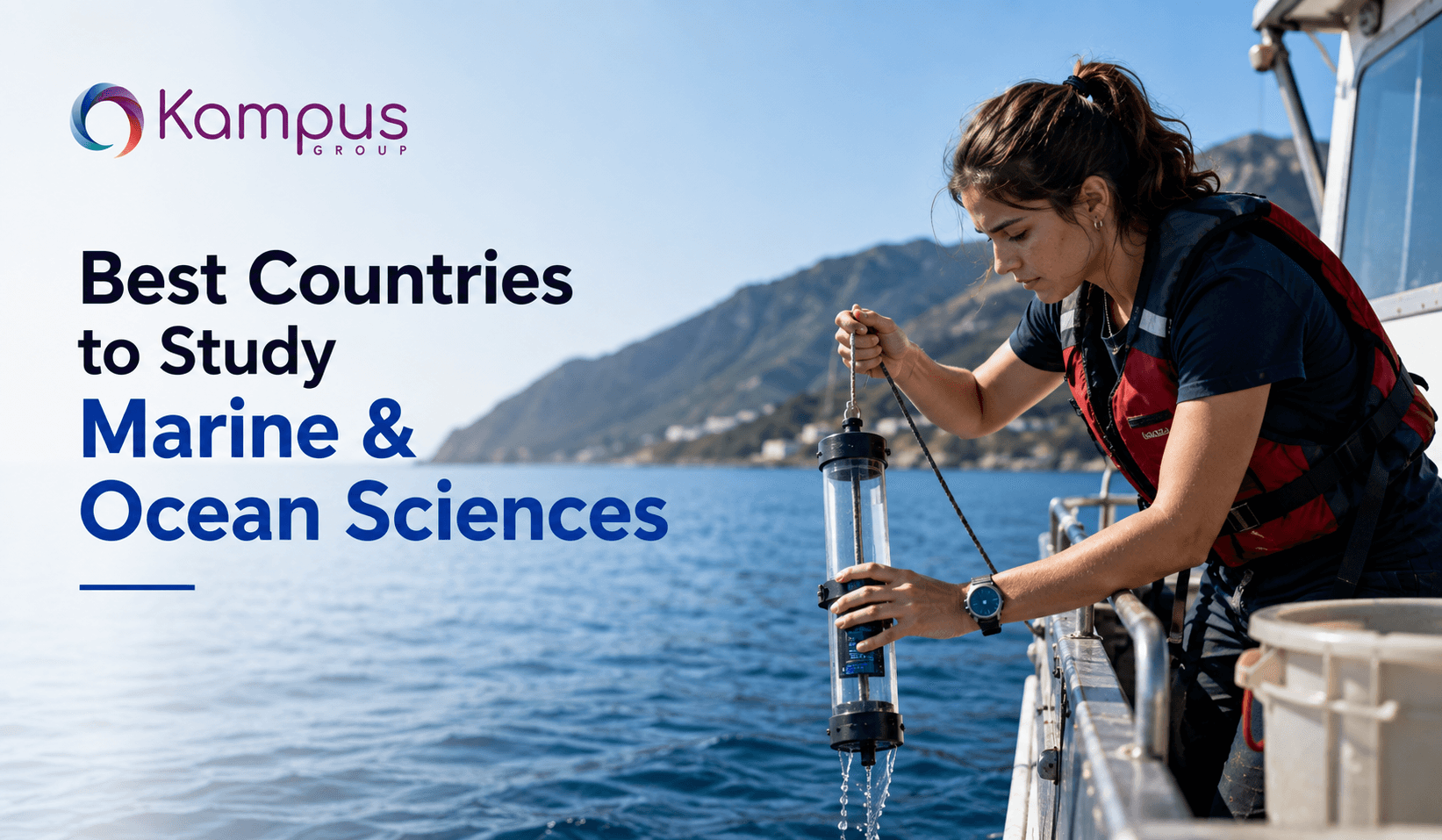
The ocean covers more than 70% of the Earth’s surface, but much of it remains unexplored. From marine biology and oceanography to fisheries, conservation, climate science, and marine engineering, there are many exciting careers for students who want to understand and protect the world’s oceans.
If you are considering studying Marine and Ocean Sciences abroad, choosing the right country can have a major impact on your education and future career. A strong destination should offer quality universities, modern research facilities, access to marine environments, fieldwork opportunities, and good career prospects.
Here are some of the best countries to consider.
1. Australia
Australia is one of the world’s leading destinations for Marine and Ocean Sciences.
Its extensive coastline and unique marine ecosystems make it particularly attractive to students interested in marine biology, coral reefs, marine conservation, oceanography, and environmental science.
The Great Barrier Reef also provides an important environment for marine research, allowing students to study biodiversity, reef ecosystems, climate change, and conservation.
Why study Marine and Ocean Sciences in Australia?
- Access to diverse marine ecosystems
- Strong marine biology programs
- Excellent opportunities for field research
- Research opportunities involving coral reefs and climate change
- Strong marine conservation research
- Extensive coastline for practical learning
Australia is an especially good choice if you want a degree that combines classroom education with practical marine research.
2. Canada
Canada is another excellent destination for students interested in marine and ocean sciences.
The country has coastlines on the Atlantic, Pacific, and Arctic oceans, giving students access to remarkably different marine environments.
Canadian universities and research institutions are involved in marine biology, oceanography, fisheries, marine ecology, climate science, and Arctic research.
Canada is particularly attractive for students interested in understanding how climate change is affecting marine ecosystems.
Why study Marine and Ocean Sciences in Canada?
- Access to three major ocean regions
- Strong fisheries and ocean research
- Opportunities for Arctic marine research
- Marine conservation programs
- Strong links between ocean and climate research
- Opportunities for postgraduate research
If you are interested in polar oceans, fisheries, or climate-related marine research, Canada is worth considering.
3. United States
The United States has one of the largest higher-education systems in the world, giving Marine and Ocean Sciences students a wide range of options.
Universities across the country offer programs in marine biology, biological oceanography, physical oceanography, fisheries, marine conservation, coastal science, and marine engineering.
The country’s extensive coastlines and different marine ecosystems also provide opportunities for field research.
Why study Marine and Ocean Sciences in the USA?
- Wide range of specialized programs
- Extensive marine research infrastructure
- Strong laboratory and fieldwork opportunities
- Programs covering both science and engineering
- Opportunities to specialize in different areas of ocean research
The USA can be particularly suitable for students who already know which branch of marine science they want to pursue.
4. United Kingdom
The United Kingdom has a long-standing reputation for marine and ocean research.
Universities and research organizations in the UK work across areas such as oceanography, marine biology, marine conservation, climate science, coastal management, and marine policy.
The UK is also a good destination for students interested in the relationship between marine science and environmental policy.
Why study Marine and Ocean Sciences in the UK?
- Strong research tradition
- Excellent oceanography programs
- Marine conservation opportunities
- Climate and environmental research
- Strong postgraduate opportunities
- Access to established marine research institutions
Students interested in research, conservation, climate science, or marine policy may find the UK particularly appealing.
5. Norway
Norway is one of the strongest choices for students interested in fisheries, aquaculture, Arctic marine science, and ocean technology.
With its long coastline and proximity to the North Atlantic and Arctic regions, marine science is closely connected to the country’s economy and research activities.
Norway is also internationally recognized for its work in fisheries and aquaculture.
Why study Marine and Ocean Sciences in Norway?
- Strong Arctic and North Atlantic research
- Excellent fisheries programs
- Advanced aquaculture research
- Ocean technology opportunities
- Strong focus on sustainability
- Access to unique cold-water marine ecosystems
Norway is an excellent option for students who want to combine marine science with fisheries, sustainability, or technology.
6. New Zealand
New Zealand’s location in the Pacific Ocean gives students access to a diverse range of marine environments.
The country is well suited to students interested in marine biology, ecology, conservation, fisheries, and environmental science.
Its marine research also covers biodiversity, sustainable resource management, and the protection of marine ecosystems.
Why study Marine and Ocean Sciences in New Zealand?
- Rich marine biodiversity
- Strong conservation research
- Excellent opportunities for fieldwork
- Fisheries and environmental science programs
- Access to Pacific marine environments
- Practical learning opportunities
New Zealand can be particularly attractive to students who enjoy field-based research and marine conservation.
7. Germany
Germany is a strong destination for students interested in the scientific side of ocean research.
Its universities and research institutions work in areas including oceanography, marine geoscience, climate science, marine ecosystems, and ocean technology.
Students interested in understanding the physical processes of oceans or their relationship with climate change can find strong research opportunities.
Why study Marine and Ocean Sciences in Germany?
- Strong scientific research
- Oceanography and marine geoscience
- Climate and marine ecosystem research
- Marine technology opportunities
- Strong research institutions
- Opportunities for advanced study
Germany may be especially suitable for students interested in research-intensive careers.
8. Netherlands
The Netherlands is particularly well known for its expertise in water management and coastal engineering.
Because much of the country is closely connected to the sea, coastal protection and water management are important areas of research and innovation.
Students interested in marine engineering, coastal management, oceanography, environmental science, and water technology can find valuable opportunities here.
Why study Marine and Ocean Sciences in the Netherlands?
- Strong coastal engineering expertise
- Advanced water-management research
- Marine technology opportunities
- Coastal climate research
- Strong practical applications of marine science
If you are more interested in the engineering side of ocean science, the Netherlands should be high on your list.
9. France
France offers a broad range of opportunities in marine and ocean sciences.
Its extensive coastline and overseas territories give researchers access to different marine environments, while universities and research institutions work in fields such as oceanography, marine biology, fisheries, marine biotechnology, and conservation.
Why study Marine and Ocean Sciences in France?
- Diverse marine environments
- Strong oceanographic research
- Marine biology opportunities
- Fisheries research
- Marine biotechnology
- Conservation and environmental research
France can be a good choice for students who want to explore several areas of marine science before specializing.
10. Japan
Japan has a long-standing relationship with the ocean, making marine science and technology particularly important.
Japanese universities and research institutions offer opportunities in marine biology, fisheries, ocean engineering, marine technology, and oceanographic research.
The country’s strength in technology also makes it an interesting destination for students who want to combine marine science with engineering.
Why study Marine and Ocean Sciences in Japan?
- Advanced marine technology
- Strong ocean engineering
- Fisheries research
- Marine biology opportunities
- Oceanographic research
- Strong science and technology ecosystem
Japan is particularly worth considering if you are interested in the technological side of marine science.
Which Country Is Best for Your Marine Science Career?
The best country depends on your intended specialization.
Best for Marine Biology and Conservation
Consider Australia, New Zealand, the USA, and the UK.
These countries provide access to diverse marine ecosystems and research opportunities involving biodiversity and conservation.
Best for Oceanography
Consider the USA, UK, Australia, Germany, and Canada.
These destinations offer opportunities to study the physical, chemical, biological, and geological processes of the ocean.
Best for Fisheries and Aquaculture
Consider Norway, Canada, Japan, and Australia.
These countries have significant research and industry activity surrounding fisheries and aquaculture.
Best for Arctic Marine Science
Consider Canada and Norway.
Both provide access to important Arctic and northern marine research environments.
Best for Marine Engineering and Technology
Consider Japan, Norway, the Netherlands, and the USA.
These destinations are particularly relevant for students interested in marine technology, engineering, offshore systems, and ocean-related innovation.
Best for Coastal Engineering
The Netherlands is one of the most obvious choices, particularly for students interested in coastal protection, water management, and climate adaptation.
What Should You Consider Before Choosing a Country?
Choosing a country should involve more than simply looking at university rankings.
Start by examining the specific course curriculum. Marine Biology, Oceanography, Fisheries Science, Marine Engineering, and Marine Conservation can prepare you for very different careers.
You should also investigate:
- Tuition fees
- Scholarships and funding
- Cost of living
- Visa requirements
- Post-study work opportunities
- University research facilities
- Laboratory facilities
- Fieldwork opportunities
- Access to marine environments
- Industry partnerships
- Career opportunities after graduation
It is also important to consider the location of the university. A university close to the coast may provide more opportunities for fieldwork, while a research-intensive institution farther inland may offer stronger laboratory or computational facilities.
Most importantly, choose a program that matches your career goals, rather than choosing a country simply because it is popular.
Career Opportunities in Marine and Ocean Sciences
A degree in Marine and Ocean Sciences can lead to careers in several industries.
Depending on your specialization, you could work as a:
- Marine biologist
- Oceanographer
- Marine ecologist
- Fisheries scientist
- Aquaculture specialist
- Marine conservationist
- Coastal scientist
- Marine environmental consultant
- Ocean engineer
- Marine policy specialist
- Climate researcher
- Marine data scientist
- Research scientist
Graduates can work in universities, government agencies, environmental organizations, research institutes, fisheries companies, marine technology companies, and consulting firms.
As concerns about climate change, ocean pollution, biodiversity, food security, and coastal development continue to grow, knowledge of marine systems is becoming increasingly valuable.
Studying Marine and Ocean Sciences abroad can give you much more than a university qualification. It can provide access to unique marine environments, advanced research facilities, international researchers, and practical experience that can shape your future career.
Whether you are fascinated by coral reefs in Australia, Arctic waters in Canada and Norway, ocean technology in Japan, or coastal engineering in the Netherlands, there are opportunities to build a career around the ocean.
The key is to look beyond the country name and find a specific university and program that matches your interests, finances, academic background, and long-term career goals.
With the world’s oceans facing growing environmental and technological challenges, studying Marine and Ocean Sciences can put you at the centre of some of the most important scientific questions of the future.
Frequently Asked Questions
Which country is best for studying Marine and Ocean Sciences?
There is no single best country for everyone. Australia, Canada, the USA, the UK, Norway, New Zealand, Germany, the Netherlands, France, and Japan are all strong options. Your best choice depends on your specialization, budget, preferred study environment, and career goals.
Is Marine Biology the same as Oceanography?
No. Marine Biology focuses primarily on marine organisms and ecosystems, while Oceanography is a broader field that examines the physical, chemical, geological, and biological processes of oceans.
Which country is best for Marine Biology?
Australia, New Zealand, the USA, and the UK are among the strongest options for students interested in Marine Biology and marine conservation.
Which country is best for Oceanography?
The USA, UK, Australia, Canada, and Germany offer strong opportunities in different areas of oceanography.
Is Marine and Ocean Sciences a good career?
Yes. Marine and Ocean Sciences can lead to careers in research, conservation, fisheries, aquaculture, environmental consulting, climate science, marine technology, engineering, and government policy.
Can international students study Marine and Ocean Sciences?
Yes. Many universities in countries such as Australia, Canada, the UK, the USA, New Zealand, Germany, Norway, and Japan offer programs that accept international students.
What subjects are useful for studying Marine and Ocean Sciences?
Useful subjects include Biology, Chemistry, Physics, Mathematics, Geography, Environmental Science, and Computer Science. The exact requirements depend on the university and degree program.

Written by
Fimijoba Micheal Oladokun is an International Student Consultant, SEO Specialist and Technical Writer at Kampus Group Nigeria. He leverages data-driven insights to support strategic decision-making while guiding prospective international students through admissions and study abroad processes. He also creates clear, SEO-optimized technical content that enhances digital engagement and simplifies complex educational topics.
Get a free, unbiased assessment from a Kampus Group advisor — no obligation, completely free.
More on Study Abroad

Best Countries to Study Urban Planning and Smart Cities
Cities are changing rapidly. Population growth, climate change, housing shortages, traffic congestion, digital technology, and the demand for more sustainable infrastructure are forcing cities around the world to rethink
21 Aug 2026
Countries With the Best Opportunities for Creative Arts Students
Creative Arts is a broad field that goes far beyond traditional fine art. Today, creative professionals work across film, animation, fashion, music, theatre, photography, graphic design, gaming, advertising, digital medi
14 Aug 2026
Best Countries to Study Food Science and Technology
Food is much more than what we eat. Behind every packaged product, beverage, nutritional supplement, or processed food is a combination of science, technology, quality control, safety, and research. This is where Food Sc
14 Aug 2026